
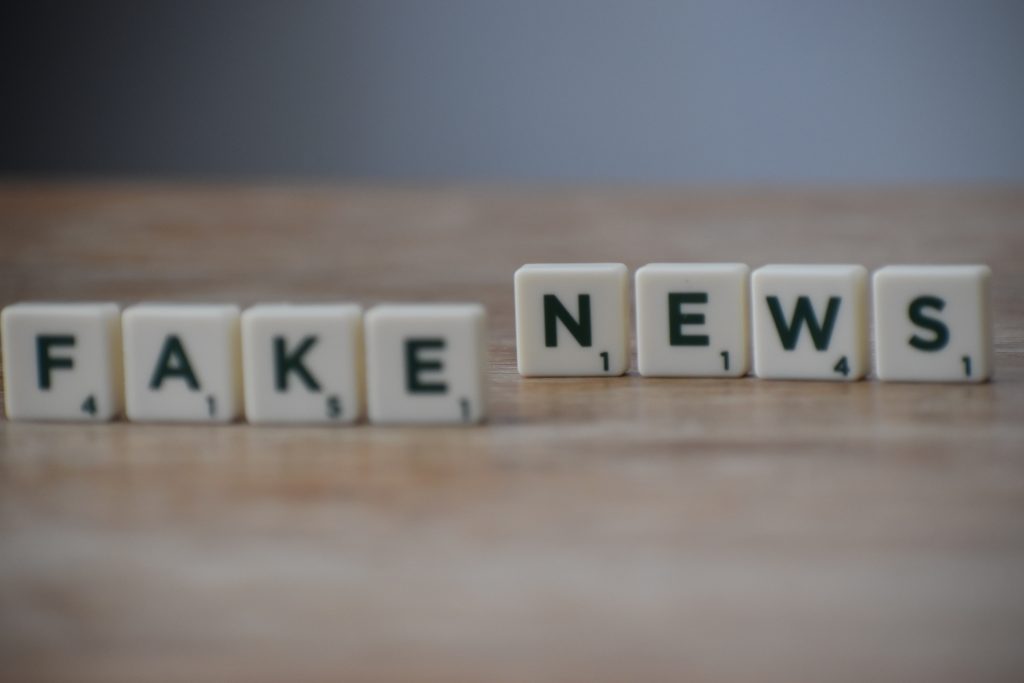
This is copy and paste from some interesting reading about our own biases and interpretation of the news and other facts in our lives, by Mark Tyrell from Uncommon Knowledge. It’s about how you create your own fake news.
I think it’s particularly relevant now with all that is going on in the world with the pandemic, and tragic recent events in America relating to George Floyd.
“We all understand by now that you can’t trust everything you read. The media is all too happy to bias and twist information to fit its own agenda or narrative. Sadly, much of the ‘information’ we are exposed to is in the form of fake news, thinly veiled propaganda, and simplistic but emotive memes. But it seems propaganda doesn’t just come from the outside: information manipulation and mismanagement happens in our own heads, too.
Of course, the idea that we seek confirmation of our own biases is nothing new. And confirmation bias can be particularly deeply ingrained when we feel strongly about something. But a recent study conducted at Ohio State University shows that we manipulate data towards our own biases even when presented with clear, accurate numerical information.7
For example, some people, when shown that the number of Mexican immigrants into the USA has declined recently – which is true, but goes against many people’s beliefs – remembered the opposite. They believed the information they were shown had reflected their pre-existing beliefs, despite clear evidence to the contrary. They had changed the numbers in their minds.
The researchers found that people usually remembered the stats fairly accurately when they were consistent with how they already viewed the world, but not when they went against their prejudices.
Interestingly, many people didn’t get the numbers themselves wrong – they simply misapplied them. “We had instances where participants got the numbers exactly correct – 11.7 and 12.8 – but they would flip them around,” lead author Jason Coronel said. “They weren’t guessing – they got the numbers right. But their biases were leading them to misremember the direction they were going.”
What’s more, these people then tended to pass on those false beliefs so that it became a kind of “received wisdom” – which, like Chinese whispers, could sometimes become even more distorted as it was passed along.
Coronel said, “They may not be doing it purposely, but their own biases can lead them astray. And the problem becomes larger when they share their self-generated misinformation with others.”
But it’s not that the subjects hadn’t paid attention to the figures that conflicted with their beliefs. In fact, they had paid more attention to those conflicting stats.
The researchers used eye-tracking technology on the research subjects while they read in order to judge which aspects of the statistics they were paying most attention to. Weirdly, the subjects actually spent more time looking at the numbers they would later misremember.
Jason Coronel said, “We could tell when participants got to numbers that didn’t fit their expectations. Their eyes went back and forth between the numbers, as if they were asking ‘what’s going on.’ They generally didn’t do that when the numbers confirmed their expectations.”
So they paid more attention to the numbers they would later misremember! Let that sink in.
The beliefs and assumptions of depression skew our memory to fit those assumptions and reinforce those beliefs.8 Dishing out praise to people with low self-esteem may actually make them feel worse, as it doesn’t line up with their reality.9 And so too with religious or political fanaticism. Once their prevailing mindset is fixed, only information that confirms their position, to the exclusion of all other perspectives, is accommodated in the mind of the fanatic.10
It’s all too easy for the truth to become somehow relative as we bend reality to fit the ‘propaganda’ of our prevailing mental set. And it can cause us and others untold problems as we flee further and further from the truth of things. So how can we avoid such biases? Well, we can take a huge step closer to understanding the true nature of reality simply by being aware of our biases.
When people talk about wanting to ‘know themselves’, what do they mean? Do they consider that being able to relax judgment, avoid leaping to conclusions, and observe their own expectations and assumptions objectively is an integral part of self knowledge?
Why do I believe what I do? Is it just because everyone around me believes it? Can I update my options when presented with new or wider information?
If we can’t respond reasonably to reality then we are destined to become unwitting peddlers of fake news as we become targets for the implantation of any old belief.
It’s easy to bury our heads and fail to see disconfirming feedback. But if we are to grow as human beings, we need to be able to see and learn from new and different perspectives. After all, we only get one shot at life.”
Need to question your mindset, or make changes, please contact me below
https://www.edvhypnotherapy.co.uk/hypnotherapist-in-bridgwater/
